

Is Mole Removal Safe? Exploring Risks, Benefits, and Recovery
posted: Jan. 15, 2025.
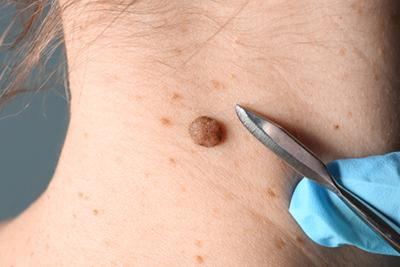
Moles are noncancerous skin growths that are caused by the clumping together of melanocytes, the skin cells responsible for skin color. They can be flat or raised, smooth or rough and can come in many colors including brown, tan, pink/red and skin toned. Most moles are normal and don’t require treatment. However, there are some cases where you may want or need a mole removed. The dermatologists at Central Dermatology Center offer comprehensive dermatology services, including mole removal. They have several convenient office locations in Cary, Chapel Hill, Fuquay-Varina, Pittsboro, Raleigh, and Sanford.
What You Need To Know About Mole Removal
You may be considering mole removal if you have a mole that is:
- In a highly visible area on your face or body
- Large, dark, or unattractive
- Affecting your appearance and self-esteem
A dermatologist may also have recommended mole removal if the mole appears abnormal. Abnormal moles can be an early sign of skin cancer if the mole is:
- Poorly defined with ragged borders
- Asymmetrical with an irregular shape
- Changing in color, shape, or size
- Large, with a diameter greater than 6 millimeters
- Painful, itchy, or bleeding
- Growing back after being previously removed
If you want or need mole removal, it’s common to wonder whether it is safe. Mole removal procedures are very safe, with few to no side effects and minimal recovery time. Any method of mole removal will leave you with a scar, but your dermatologist will help you decide which technique will be best for your cosmetic outcome. Your dermatologist uses tools, techniques, and procedures approved by the FDA. Your dermatologist can also help you decide on a method of mole removal. The most common methods of mole removal include but not limited to:
Shaving the mole flat to the surrounding skin if you have a small mole. This option doesn’t require sutures, but the mole could grow back.
Punch excision by removing the mole with a punching instrument to remove the entire mole. This option does require a few sutures. The sutures may be dissolvable, or you may need to have the sutures removed in office based on what your provider feels will give you the best results.
Standard excision by cutting a football shaped piece of skin from around the mole then stitching it up in a thin straight line with two layers of sutures. The bottom layer of suture is dissolvable, and the top layer can be either dissolvable or need to be removed in office based on what your provider feels will give you the best results.
Want To Know More About Mole Removal?
To learn more about the benefits and risks of mole removal and mole removal options, call the dermatologists at Central Dermatology Center. We treat patients throughout the Triangle area of NC with office locations in Cary, Chapel Hill, Fuquay-Varina, Pittsboro, Raleigh, and Sanford.
- Submit an Appointment Request
- Call us in Cary, NC at (919) 653-1344
- Call us in Chapel Hill, NC at (919) 401-1994
- Call us in Fuquay-Varina, NC at (984) 849-4328
- Call us in Pittsboro, NC at (984) 282-2302
- Call us in Raleigh, NC at (919) 782-2735
- Call us in Sanford, NC at (919) 776-5286